

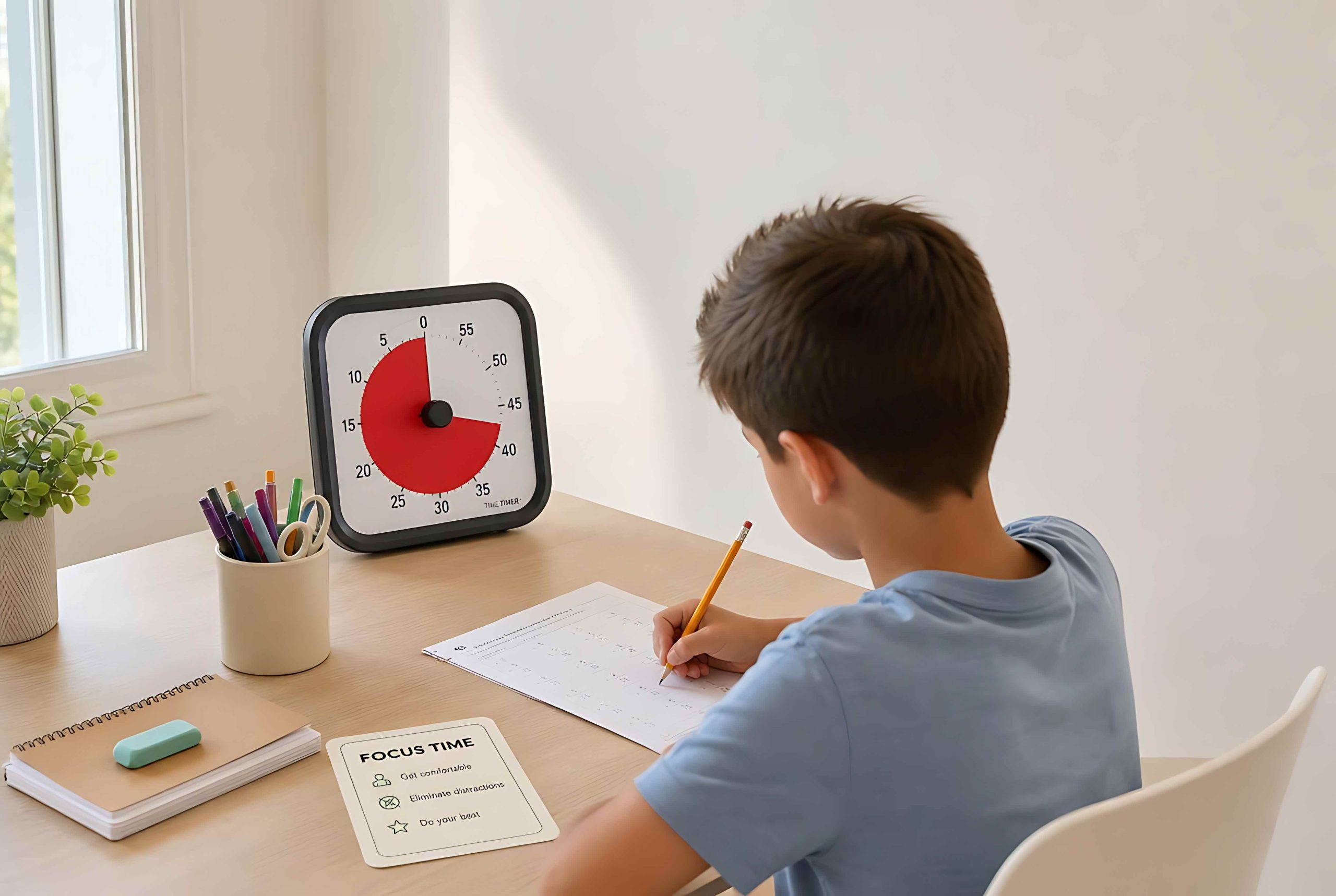
Helping Your Child Build Better Study Habits at Home
 Emily Novoa
  October 16 ,
2026
October 16 ,
2026 
 0 Comments
Helping your child succeed in school starts with more than completing homework and preparing for tests. Developing strong study habits can help children stay organized, manage their time, retain information, and become more confident, independent learners. However, knowing how to study effectively does not always come naturally to students.
Some children struggle to get started on assignments, while others become distracted, procrastinate, or spend hours studying without seeing the results they want. The good news is that parents can help children develop better study habits at home with a few simple strategies and consistent routines.
Whether your child is in elementary school, middle school, or high school, establishing effective study habits early can support long-term academic success. Here are practical ways to help your child create a productive study routine, stay motivated, and get more out of their learning.
- Create a Consistent Homework and Study Routine
One of the most effective ways to improve study habits is to establish a predictable daily routine. When children know when and where they will complete their schoolwork, it becomes easier to get started and stay focused.
Try setting aside a consistent time each day for homework, studying, and reviewing classroom material. The ideal schedule will depend on your child’s age, extracurricular activities, and individual needs. Some children work best immediately after school, while others benefit from taking a short break before getting started.
Consistency is more important than choosing one perfect time. A regular routine helps children understand that studying is a normal part of their day rather than something they need to squeeze in at the last minute.
For younger students, parents may need to provide reminders and help organize the schedule. Older students can gradually take more responsibility for planning their study time.
Parent tip: Create a simple after-school schedule that includes time for homework, breaks, activities, and relaxation. Involving your child in the planning process can help them feel more invested in following it.
- Set Up a Dedicated Study Space
A child’s learning environment can significantly affect their ability to concentrate. Studying at the kitchen table one day, on the couch the next, and in front of the television another day may make it harder to establish consistent habits.
Whenever possible, designate a quiet, comfortable area for homework and studying. This space does not need to be a separate room or an elaborate desk setup. It simply needs to provide the basic conditions for focused work.
A productive study space should include:
- Adequate lighting and a comfortable place to sit.
- Essential supplies, such as pencils, paper, notebooks, and calculators.
- Easy access to textbooks, assignments, and other learning materials.
- Minimal distractions, including television, unnecessary noise, and unrelated devices.
Encourage your child to keep the area organized and return supplies to their proper places after each session. A clutter-free workspace can make it easier to find materials and begin assignments without unnecessary delays.
For students who prefer background noise, experiment with quiet instrumental music or another low-distraction environment to determine what works best.
- Break Large Assignments Into Smaller Tasks
Large projects, lengthy reading assignments, and upcoming exams can feel overwhelming, especially when children do not know where to begin. This can lead to procrastination, frustration, and rushed work.
Teaching your child to break assignments into smaller, manageable steps can make a significant difference.
For example, instead of telling your child to study for a science test, help them create a plan that includes reviewing vocabulary, reading class notes, practicing questions, and revisiting difficult concepts.
A research paper might be divided into choosing a topic, gathering information, creating an outline, writing a first draft, and proofreading.
Smaller tasks provide clear starting points and allow children to see their progress along the way. They also help students develop planning and organization skills that become increasingly important as schoolwork grows more demanding.
If your child frequently struggles to begin assignments or manage multiple deadlines, consider using a checklist or weekly planner to keep tasks visible and organized.
- Teach Active Study Strategies
Simply rereading notes or highlighting entire textbook pages may not be the most effective way for students to learn and remember information. Better study habits involve actively engaging with the material.
Active learning encourages children to retrieve information, apply what they have learned, and identify concepts they do not fully understand.
Encourage your child to try strategies such as:
- Practice questions: Answer questions without looking at notes first.
- Flashcards: Review vocabulary, formulas, dates, or important concepts.
- Teach-back: Explain a topic aloud as if teaching it to someone else.
- Practice problems: Work through examples independently before checking answers.
- Summarizing: Write a short explanation of a lesson in their own words.
These strategies can help students identify knowledge gaps and strengthen their understanding of classroom material.
Parents can participate by asking their children to explain what they learned that day or by helping them quiz themselves before an upcoming test. The goal is not to provide every answer but to encourage students to think through the material independently.
- Encourage Short Breaks and Manageable Study Sessions
Expecting children to sit and study for hours without a break can lead to fatigue, frustration, and reduced concentration. Many students benefit from dividing study time into shorter sessions with planned breaks.
For example, your child might work for 20 to 30 minutes before taking a five-minute break. Older students may prefer longer work periods, depending on the assignment and their ability to concentrate.
During breaks, encourage activities that help your child recharge, such as stretching, getting a drink of water, or walking around the house. Avoid activities that are difficult to stop, such as scrolling through social media or starting a video game.
The appropriate study session length will vary by age, task, and individual needs. Pay attention to when your child begins losing focus and adjust the schedule accordingly.
Regular breaks can help make studying feel more manageable while teaching children how to balance focused work with rest.
- Help Your Child Manage Distractions
Digital devices can be useful learning tools, but they can also make it difficult for students to concentrate. Text messages, social media notifications, online videos, and games can interrupt study sessions and extend the time needed to complete assignments.
Work with your child to establish reasonable boundaries around technology during homework and study time.
Depending on your child’s age and responsibilities, this might mean silencing notifications, keeping a phone in another room, closing unrelated browser tabs, or using website-blocking tools during focused work periods.
It is also important to distinguish between necessary technology and unnecessary distractions. If your child uses a computer for assignments, help them develop habits that keep their attention on the task at hand.
Rather than simply imposing rules, explain why minimizing distractions matters and invite your child to help determine which strategies work best.
Over time, these practices can strengthen self-management skills and help students take greater responsibility for their own learning.
- Teach Time Management and Organization
Good study habits depend on more than knowing how to review information. Students also need to manage their schedules, track assignments, and prepare for upcoming deadlines.
Children who wait until the night before a test to begin studying may feel overwhelmed and have less time to identify areas that need improvement. A more consistent approach spreads studying across several days.
Help your child use a planner, calendar, or assignment-tracking app to record due dates, tests, projects, and other responsibilities. At the beginning of each week, review upcoming tasks together and decide which ones need attention first.
Encourage your child to prioritize assignments based on deadlines, importance, and the amount of time required to complete them.
For example, a long-term project may need to be started well before its due date, while a short worksheet may be completed in one sitting.
These organizational skills become especially valuable during middle school and high school, when students often have multiple teachers, different assignment expectations, and more independent responsibilities.
- Make Sleep, Nutrition, and Physical Activity a Priority
Study habits are not limited to what happens at a desk. A child’s overall well-being can influence concentration, memory, motivation, and classroom performance.
When students consistently stay up late completing assignments or studying for tests, they may feel tired and have difficulty focusing the following day. Establishing a regular bedtime and maintaining age-appropriate sleep habits can support learning and daily functioning.
Balanced meals, regular physical activity, and opportunities to relax are also important parts of a healthy school routine.
If your child has a demanding schedule, help them plan homework and study sessions early enough to avoid unnecessary late nights. Encourage them to take movement breaks and maintain time for hobbies, family activities, and social connections.
A balanced routine helps children understand that academic success does not require studying every available hour. Rest and recreation are important parts of maintaining energy and motivation over time.
- Recognize Progress and Encourage Independence
Developing better study habits takes time. Children may not follow a new routine perfectly at first, and some strategies may work better than others.
Instead of focusing only on grades or completed assignments, recognize the effort your child puts into building stronger habits.
Praise specific actions, such as starting homework on time, using a planner, reviewing material before a test, or asking for help when something is unclear.
You can also encourage your child to reflect on their own progress by asking questions such as:
- What helped you stay focused today?
- Which study strategy worked best for this assignment?
- What would you do differently before your next test?
- Is there anything you need help understanding?
These conversations help children recognize their strengths and identify areas where they can improve.
As your child becomes more comfortable with their routine, gradually step back and allow them to manage more of their own responsibilities. The long-term goal is to develop independent learners who know how to organize their work, evaluate their understanding, and seek help when necessary.
When Should Parents Consider Additional Academic Support?
Even with a consistent routine, some children continue to struggle with homework, organization, concentration, or understanding classroom material. If your child spends hours studying without making progress, regularly falls behind on assignments, or becomes increasingly frustrated with school, additional academic support may help.
A tutor can work with your child to identify learning gaps, reinforce classroom lessons, and develop study strategies tailored to their needs. One-on-one tutoring also provides an opportunity for students to ask questions, practice challenging concepts, and receive individualized feedback in a supportive environment.
For students who struggle with organization, planning, or getting started on assignments, a tutor can help strengthen executive functioning skills alongside academic subjects.
Personalized learning can be especially valuable because every student has different strengths, challenges, and learning preferences. With the right guidance, children can build skills that support both immediate classroom success and long-term academic growth.
Help Your Child Develop Stronger Study Habits With Club Z! Tutoring
Building effective study habits at home can help children become more organized, confident, and independent learners. However, some students need additional guidance to develop the skills and routines that support their academic goals.
Club Z! Tutoring has more than 30 years of experience helping students succeed through personalized, one-on-one tutoring. Our qualified tutors work with each student’s individual needs and classroom curriculum to reinforce learning, address challenging subjects, and help students develop the skills they need to make progress.
Whether your child needs homework help, subject-specific instruction, test preparation, or support with study skills and executive functioning, Club Z! offers flexible in-home and online tutoring options designed to fit your family’s schedule.
Contact your local Club Z! Tutoring office today to schedule a free consultation. We will help you explore how personalized academic support can give your child the tools, confidence, and study habits they need to reach their highest potential.

 Club Z! News
- Helping Your Child Build Better Study Habits at Home
- Signs Your Child May Need a Tutor
- How to Choose the Best Tutor for Your Child’s Needs
- Back-to-School Checklist for Parents: Academic Success Edition
- The Ultimate Guide to SAT/ACT Prep
- Online vs. In-Home Tutoring: Which Is Better for Your Child?
- Homework Help Tips for Busy Parents
- Why Summer Learning Loss Is Real (and How to Prevent It)
- Top Benefits of One-on-One Tutoring for Students
- Beyond Academics: Life Skills Development Through Tutoring
CATEGORIES
- ACT (4)
- Club Z! Tutoring (90)
- College Admission Requirements (88)
- Franchise Spotlights (1)
- Press Release (3)
- SAT (4)
 RECENT POSTS

No matter how you look at it, college is an expensive proposition these days. Both public and private colleges and universities have had to raise fees and tuition as costs have increased. As a result, college student debt has skyrocketed and many students end up with loan payments years, sometimes even decades, after graduation. But with some careful planning and creative thinking, there are lots of other ways to help pay for college and avoid being stuck with big loan payments after graduation. One final but important step in the college application process is to include an application for financial aid.

As parents, and grandparents for that matter, we consider it to be a bit of a rite of passage to tell our children just how easy they have it compared to what we went through at their age. File this under the “when I was your age, I had to walk 2 miles to school each day, uphill both ways” category.

For any parent of a college-bound student, SAT and ACT test scores are no doubt at the center of most dinner table discussions. While no one will argue that test scores alone are the deciding factor in college admissions, and many colleges are moving toward a test-optional admissions policy, strong scores on the SAT and or ACT can definitely help a student’s chance of gaining admission to his/her college of choice.